
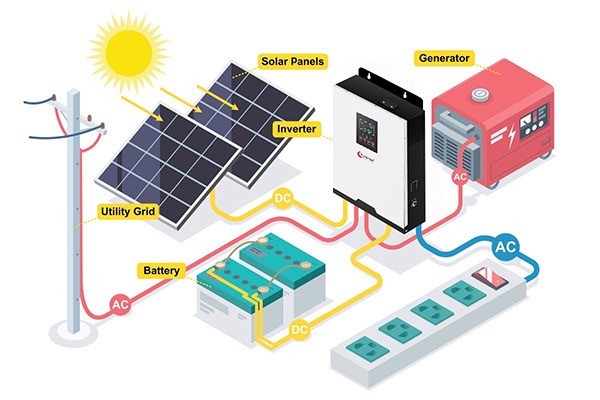
If you are looking into a solar powered system, you probably know that solar panels produce energy from the sun. But those panels cannot run your microwave or TV directly. This is where the solar inverter comes in. It is the most critical part of your solar energy system.
A power inverter acts as the “brain” of your installation. Without it, the energy captured by your roof would be useless for your home appliances. In this guide, we will break down exactly what a solar power inverter is and why you need the right one.
How does a solar power inverter work?
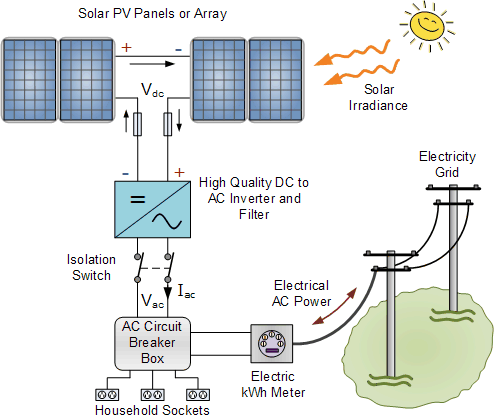
To understand how a solar inverter works, we must look at the two types of electricity. First, your solar panel generates electricity in the form of Direct Current (DC). DC electricity generated by the panels flows in one direction. However, the electrical grid and your home use alternating current AC electricity.
The main job of the inverter is converting the dc electricity from the panels into ac electricity. This process happens in milliseconds. Once the device converts dc power to ac, the energy becomes ac powered and safe for your lights, computers, and refrigerators.
Beyond just converting the DC electricity, modern inverters also track the voltage of your system. They ensure that the power system is operating at its maximum efficiency, regardless of weather changes.
What is the difference between a solar inverter and a regular inverter?
Many people ask: “Can I just use a standard power inverter for my solar panels?” The answer is usually no. While both convert dc power to ac, a solar-specific device is much more advanced.
A regular inverter usually takes power from a steady source, like a car battery. But solar power is not steady. The sun moves, and clouds pass by. A solar inverter uses a technology called Maximum Power Point Tracking (MPPT). This allows the solar powered system to adjust to the changing dc electricity generated by the panels throughout the day.
Furthermore, solar inverters are designed to synchronize with the electrical grid. They can push extra energy back to the utility company, which a regular inverter cannot do safely.
Does a solar inverter drain a battery?
If you have a battery backup, you might worry that the inverter will use up all your stored solar energy. Every power inverter requires a small amount of “standby power” to stay active. This is often called a “tare loss.”
In a well-designed solar powered system, this drain is very small. However, if the inverter is inefficient or old, it might use more power than necessary during the night. High-quality hybrid inverters are designed to minimize this drain, ensuring your battery stays charged for when you actually need it.
To prevent excessive drain, many systems include power optimization tools. These tools manage how much energy is pulled from the battery versus the electrical grid.
Conclusion: The Brain of Your Energy Future
Investing in a high-quality solar power inverter is just as important as choosing the right panels. It determines how much ac powered energy you actually get to use. Whether you choose a central inverter for its simplicity or hybrid inverters for battery flexibility, understanding how your solar inverter works is the first step toward energy independence.
By converting the dc electricity efficiently, you save money on your utility bills and help the planet. If you are ready to upgrade your power system, consult with a professional to find the perfect type of solar inverter for your home’s unique needs.

.jpg)
.jpg)