
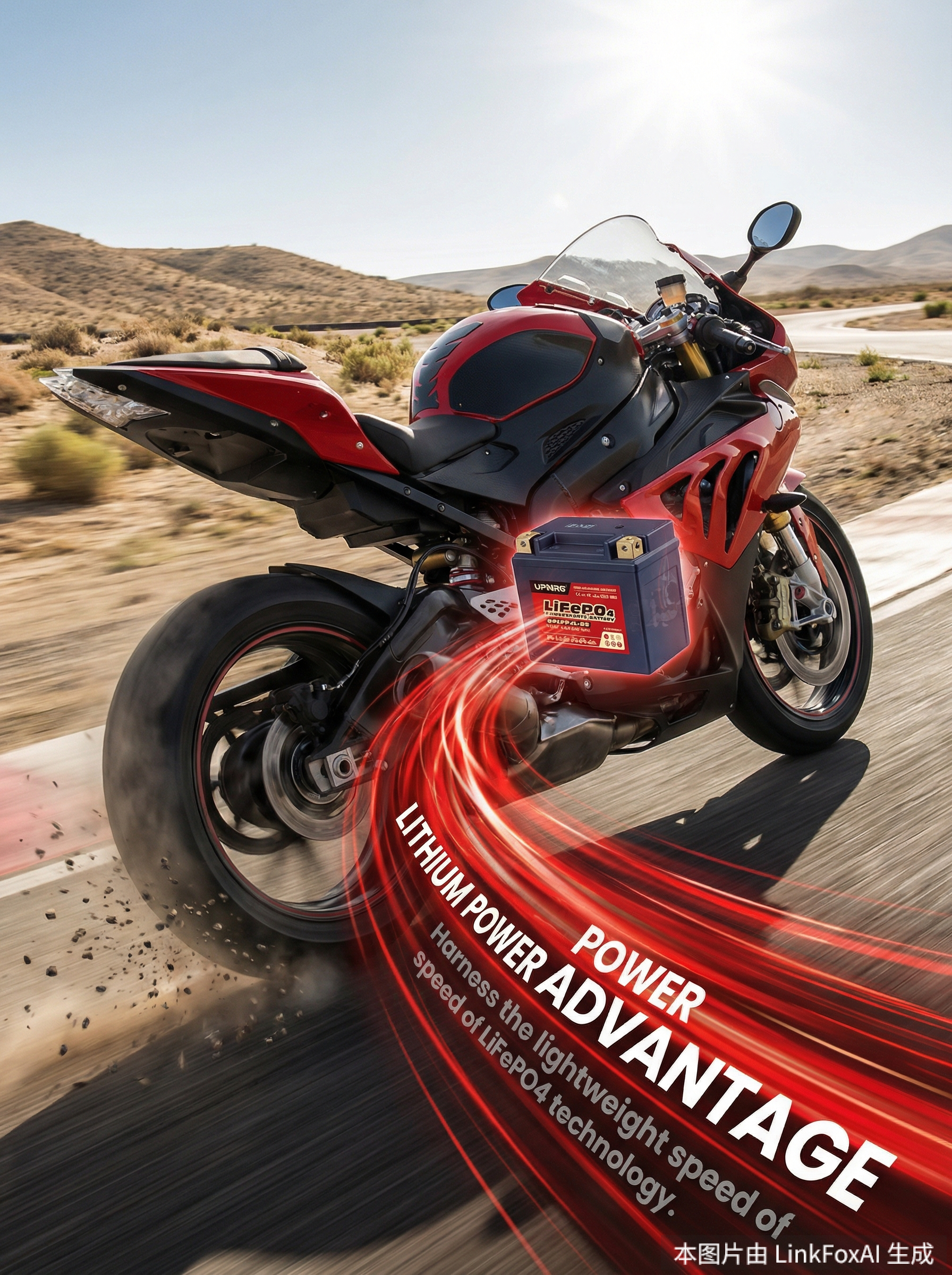
The transition from traditional lead acid batteries to lithium-ion technology has revolutionized the motorcycle industry. For riders seeking peak performance, a lithium motorcycle battery offers a lightweight, high-power alternative that traditional battery chemistry simply cannot match. Whether you are racing on a track or commuting through the city, understanding the technical specifications and dimensions of your powersports battery is crucial for vehicle compatibility and safety.
Why Upgrade to a Lithium Powersports Battery?
Traditional lead-acid batteries are heavy and prone to sulfation if left uncharged. In contrast, modern lithium batteries—specifically those utilizing Lithium-ion Polymer (LIP) or LiFePO4 technology—provide significantly higher cranking amps in a much smaller footprint. This shift is not just about weight reduction; it is about reliability. A high-quality lithium cell, such as the SDL-F6270140TP, is designed for extreme discharge capabilities, supporting up to 50,000 starts over its lifetime compared to the few thousand offered by lead-acid counterparts.
Technical Specifications: A Deep Dive into the SDL-F6270140TP Cell
To understand a 12V motorcycle battery pack, we must examine the individual cells that power it. According to the battery certification documents, the SDL-F6270140TP model represents cutting-edge technology in high-rate discharge lithium polymer cells.
Core Electrical Performance
- Nominal Voltage: 3.2V per cell. (Note: Four of these cells in series create a standard 12.8V motorcycle battery system).
- Nominal Capacity: 4000 mAh (4.0 Ah) at 0.2C discharge.
- Charging Voltage: 3.6V ± 0.02V per cell.
- Max Continuous Discharge Current: 30.0C or 120A.
- Burst/Peak Cranking Amps: 100.0C or 400A for less than 1 second.
This high discharge rate is what allows a small lithium motorcycle battery to start large-displacement engines that would typically require a lead-acid battery three times its size.
Standard and Rapid Charging
Efficiency is key for modern riders. The SDL-F6270140TP cell supports a standard charge of 2000 mA (0.5C), reaching a fully charged state in approximately 3 hours. For those in a hurry, it supports a rapid charge of 4000 mA (1.0C), cutting the wait time down to just 2 hours.
Physical Dimensions and Construction
Space is at a premium in modern motorcycle frames. The dimensions of the lithium polymer cell allow for incredibly compact battery builds
| Dimension Property | Specification (Max) |
|---|---|
| Thickness (T) | < 6.4 mm |
| Width (W) | < 71.0 mm |
| Length (L) | < 142 mm |
| Weight (Approx.) | 118 g |
The cell utilizes a soft aluminum packing foil, making it lightweight but sensitive to sharp objects. When these cells are assembled into a 12V pack, they are typically encased in a rigid PVC or plastic shell to ensure mechanical durability during high-vibration activities.
Safety and the Advanced Battery Management System (BMS)
Safety is a primary concern with lithium chemistry. This is where the Battery Management System (BMS) or an advanced battery management system becomes vital. The BMS acts as the brain of the battery, monitoring the battery status in real-time.
Critical Protections
- Short Circuit Protection: The specifications strictly prohibit a short circuit, as it can cause serious damage or fire. An integrated BMS will immediately disconnect the circuit if a short is detected.
- Over-Discharge Prevention: Discharging a cell below 2.2V can permanently degrade its performance. The BMS ensures the battery cuts off before reaching this “dead” state.
- Temperature Control: The battery is designed to operate between 0°C and 45°C during charging and up to 60°C during discharge. If the battery status indicates temperatures exceeding 45°C while charging, the process must be stopped immediately.
Longevity and Storage: Maximizing Charge Cycles
One of the strongest arguments for lithium is its cycle life. The SDL-F6270140TP is rated to maintain at least 80% of its initial capacity after 300 charge cycles of heavy use (2A discharge). Under normal motorcycle starting conditions, this translates to years of service.
Storage Best Practices
If you are storing your motorcycle for the winter, lithium batteries require different care than lead acid batteries:
- Ideal Voltage: For long-term storage (over 3 months), the battery should be kept at a 50% charge state, with an Open Circuit Voltage (OCV) between 3.2V and 3.4V per cell.
- Environment: Store in a cool, dry place between 10°C and 25°C.
- Maintenance: It is recommended to check and charge the battery every six months to ensure the voltage does not drop into the danger zone.
Summary: Is It the Right Choice for You?
The specifications of the SDL-F6270140TP lithium polymer cell highlight why the powersports battery market is moving away from lead-acid. With a burst discharge capacity of 400A and a lightweight profile of only 118g per cell, the power-to-weight ratio is unbeatable.
Pro Tip: Always ensure your motorcycle’s charging system is compatible with lithium. While most modern bikes work perfectly, older models might require a dedicated lithium-compatible regulator to ensure the battery is always fully charged without exceeding the 3.65V maximum charging limit.
By following proper handling guidelines—avoiding mechanical shock, preventing short circuit scenarios, and utilizing a proper battery management system BMS—riders can enjoy a more reliable and powerful starting experience for years to come.
Would you like me to help you calculate the exact battery pack dimensions needed for your specific motorcycle model?

.jpg)
.jpg)