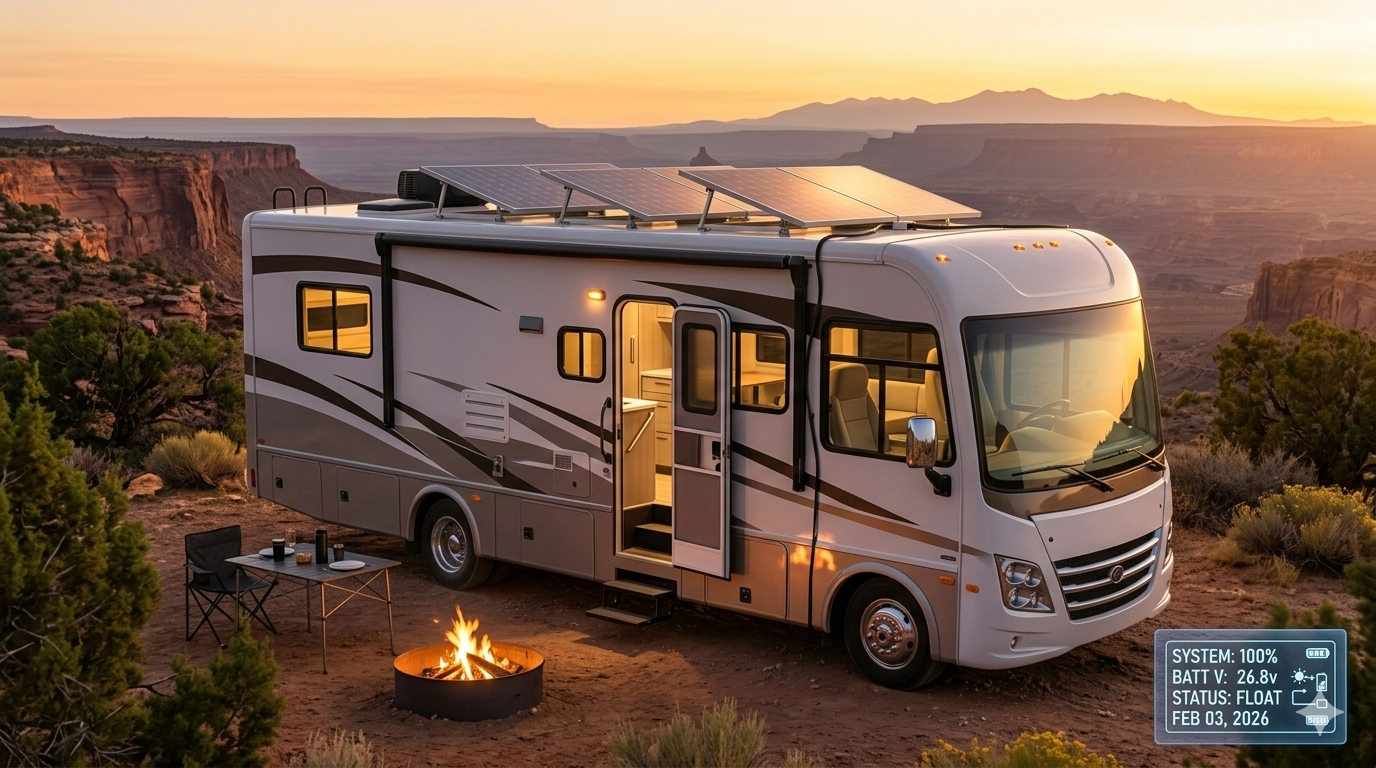
Introduction: Keeping Your RV Powered Up
Your RV is your home on wheels. It has lights, a water pump, and a refrigerator. All these devices need electricity. When you are not plugged into a wall, they pull power from your battery bank.
If you lose power, your trip can quickly become uncomfortable. Therefore, you must know exactly how to charge your rv safely and efficiently.
There are many ways to put power back into your system. You can use the sun, an engine, or a standard electrical plug. In this complete guide, we will explore every method. We will also look at different battery types and how to treat them right.
Step 1: Know Your RV Batteries
Before you learn about battery charging, you must know what kind of battery you have. Not all batteries are the same. They use different chemicals. They require different charging rules.
Generally, rv batteries fall into two main categories: lead-acid and lithium.
Flooded Lead Acid Batteries
These are the oldest and most common batteries. Flooded lead acid batteries are cheap to buy. However, they need a lot of maintenance. You must check their water levels regularly. You must also add distilled water when they get low.
More importantly, you should never drain them below 50% capacity. If you drain them too low, you will damage them permanently. They also charge very slowly.
Absorbed Glass Mat (AGM)
Absorbed glass mat batteries are an upgrade from flooded ones. They are still lead-acid batteries, but they are sealed. You do not need to add water to them. They handle vibrations from the road much better. They also charge a little faster than flooded batteries.
Lithium Ion and LiFePO4 Batteries
This is the newest and best technology for RVs. A standard lithium ion battery is powerful, but a specific type is best for camping. This type is the lithium iron phosphate battery.
You will often see this written as a lifepo4 battery. These lithium batteries are amazing. They weigh half as much as lead-acid batteries. You can drain them all the way to 0% without hurting them. They also charge incredibly fast.
While a LiFePO4 battery costs more upfront, it lasts up to ten times longer. It is the best long-term investment for any RV owner.
Method 1: Charging with Shore Power
The easiest way to charge your battery is to plug your RV into a campground pedestal. This power source is called shore power. It is simple, fast, and reliable.
How Shore Power Works
Campground pedestals provide AC power (Alternating Current). This is the same type of power you have in a regular house. However, your RV battery stores DC power (Direct Current).
You cannot put AC power directly into a DC battery. This is where your RV’s built in converter comes in. When you plug into shore power, the electricity travels to the converter.
The converter changes the AC power into DC power. It then sends this DC power to your battery bank. If your converter is modern and works well, it will safely bring your system to a full charge.
Method 2: Using a Generator
What if you are camping in the wild with no electrical plugs? You can use a gas or diesel generator. A generator works exactly like shore power.
You plug your RV’s main power cord directly into the generator. The generator creates AC power. Your built in converter turns it into DC power and charges the battery.
Generators are great because they provide a massive power source very quickly. You can run your air conditioner and charge your battery at the same time. However, generators are noisy. They also require fuel. Many national parks have strict rules about when you can run them.
Method 3: Solar Power (The Green Way)
If you hate the noise of generators, solar power is the answer. Using the sun is silent, clean, and free after the initial setup. Many modern RVs come with solar panels already installed on the roof.
How Solar Panels Charge Your RV
Solar panels collect energy from the sun. They turn sunlight into raw DC electricity. However, the voltage from solar panels jumps up and down. It changes based on how bright the sun is.
If you send this wild voltage straight to your battery, it will explode or catch fire. You must control the energy. This is why you need a charge controller.
The Role of the Charge Controller
The charge controller sits between the solar panels and the battery. It is a smart device. It takes the wild solar energy and smooths it out.
It feeds the battery the exact voltage it needs. Once the battery reaches a full charge, the controller stops the flow of electricity. This prevents overcharging. If you use solar, a high-quality MPPT charge controller is highly recommended.
Method 4: Charging from the Tow Vehicle (Alternator)
You can actually charge your battery while you drive down the highway. Every vehicle has an alternator. The alternator generates electricity to run the engine and charge the car battery.
If you have a motorhome, the engine alternator charges the house batteries while you drive. If you tow a travel trailer, the 7-way plug connects your truck to the trailer.
This plug sends a small amount of DC power back to the trailer battery. It is not a very strong power source. It charges slowly. But it is a great way to arrive at your campsite with a little extra power.
Method 5: External Battery Chargers
Sometimes, your RV’s built-in systems are not enough. Maybe your RV is in winter storage. Maybe your built-in converter broke. In these cases, you need external battery chargers.
These are portable devices. You plug the charger into a regular wall outlet. Then, you clip the red and black cables directly onto your battery terminals.
Smart battery chargers are excellent. They read the battery’s health. They push power in stages. If you upgrade to a lifepo4 battery, make sure your external charger has a specific “Lithium” setting. Lithium requires a different voltage curve than lead-acid.
Understanding the Stages of Battery Charging
Charging is not just pouring power into a box. It is a careful chemical process. Good chargers use a three-stage charging profile. This protects the battery and extends its life.
1. Bulk Charge Phase
This is the first stage. The charger sends a massive amount of power to the battery. The voltage rises steadily. During this phase, the battery gains about 80% of its capacity very quickly.
2. Absorption Phase
Once the battery hits 80%, the charger slows down. It holds the voltage steady. It slowly pushes the last 20% of power into the battery. This prevents the battery from getting too hot.
3. Float Phase
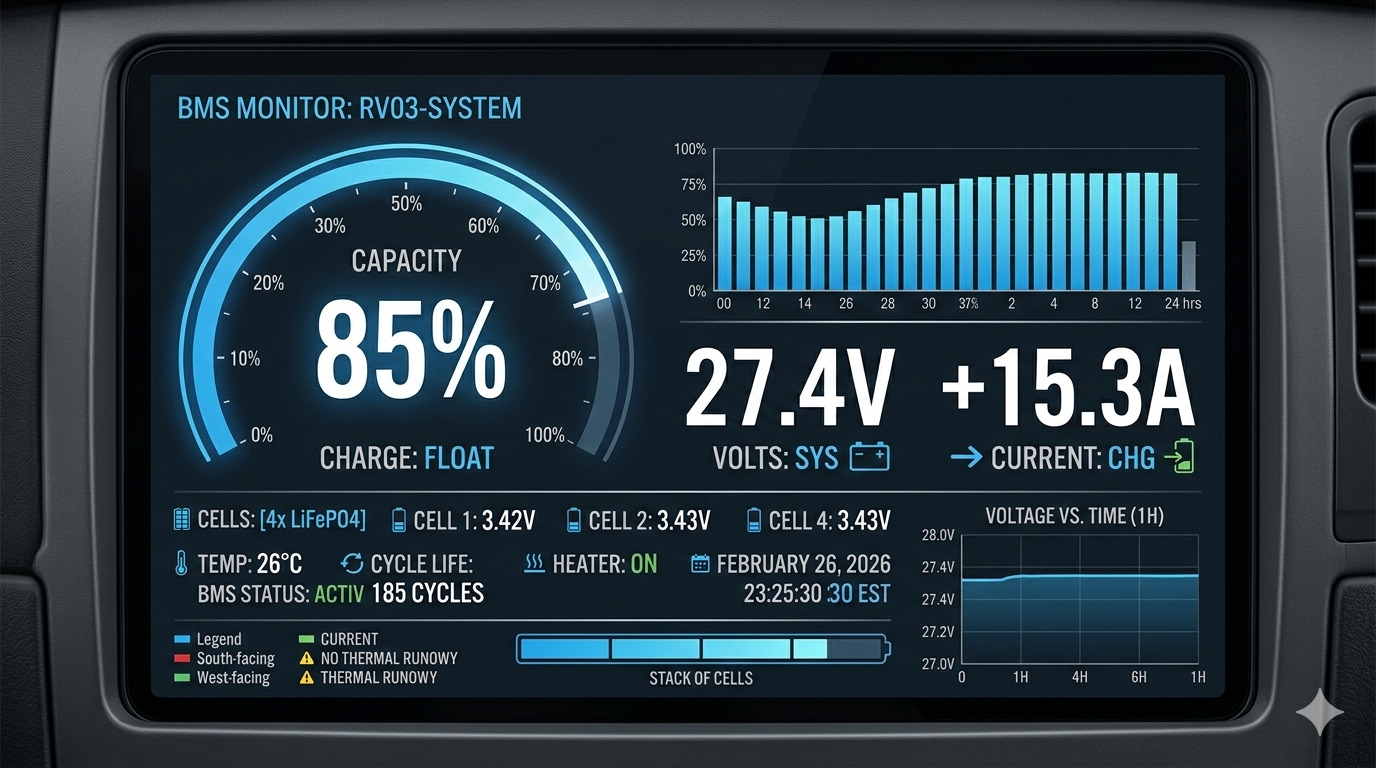
When the battery reaches a full charge, the charger drops the voltage. It enters the float phase. It simply “trickles” a tiny amount of power to keep the battery at 100%.
Note: A lithium iron phosphate battery does not usually need a float phase. It holds its charge perfectly without trickling.
Crucial Tips for Battery Health
Now you know the methods. Let us look at the rules. Following these tips will save you money.
Protect Lead-Acid Batteries
If you have flooded lead acid batteries, never let them drop below 12.0 volts. That is roughly 50% capacity. Charge them back to 100% as soon as possible. Also, remember to check their water levels every month. Only use distilled water to refill them.
Upgrade Your Converter for Lithium
Many older RVs have converters built for lead-acid. If you install a new lifepo4 battery, your old converter might not charge it fully. Lithium needs higher voltage. You might need to replace your built in converter with a lithium-compatible one.
Watch the Temperature
Extreme cold hurts batteries. You cannot charge a lithium ion battery if the temperature drops below freezing (32°F or 0°C). Charging a freezing lithium battery will ruin it instantly. Buy batteries with built-in heaters if you camp in the winter.
Conclusion: Powering Your Adventures
Learning how to manage your power is part of the RV lifestyle. You rely on your lights, your fridge, and your water pump.
Whether you plug into shore power, start a generator, or use solar panels, the goal is the same. You want a full charge.
Remember to check your specific battery type. If you have an old system, consider upgrading to lithium iron phosphate. It will change the way you camp. You will have more power, less weight, and zero maintenance.
Keep your batteries happy, and your RV will always be ready for the next adventure.
.jpg)
.jpg)