
Category: Battery Tech | Reading Time: 5 Minutes
Many people ask: What is a deep-cycle battery? Simply put, it’s a battery designed to provide a steady supply of power over a long period. Unlike the battery in your car (which is designed for quick starts), a deep-cycle battery is like a marathon runner, capable of working continuously until the job is done.
In this blog post, we’ll explore battery types, how they work, and the best maintenance practices. Whether you’re looking for any type of battery, we have the answers for you.
What Does Deep Cycle Battery Mean?
To understand this technology, we must delve into its internal structure. So, structurally speaking, what exactly does a deep-cycle battery mean? The key lies in the lead plates.
A standard car battery is a “starting battery.” It releases high energy instantaneously to start the engine. Once the engine starts, the alternator takes over supplying power to the battery. These batteries use thin, spongy plates to allow for rapid energy release.
In contrast, deep-cycle batteries use much thicker lead plates. These robust plates enable the battery to be discharged and recharged many times. This process is called “cycling.” While a regular car battery would quickly be damaged if fully discharged, deep-cycle batteries are designed to withstand this repeated charging and discharging process. They can provide a stable power supply for hours or even days.
Exploring Different Battery Types
Not all batteries are created equal. When buying batteries, you’ll typically encounter three main types. Each type of deep-cycle battery has its own advantages and disadvantages.
1. Flooded Deep Cycle Batteries
This is a traditional lead-acid battery, which has been around for over 100 years. Inside the battery, lead plates are immersed in an electrolyte solution of water and sulfuric acid.
Flooded deep-cycle batteries are usually the most economical option. However, they require maintenance. You must regularly check the electrolyte level and add distilled water. Furthermore, because gases are released during charging, good ventilation is also required, making daily maintenance somewhat troublesome.
2. Sealed Lead Acid Batteries (SLA)
If you want a more user-friendly battery, consider sealed lead-acid batteries. As the name suggests, they are sealed. The electrolyte is sealed inside the battery, so there is no leakage. This makes them maintenance-free.
The most common type of these batteries is the Absorbed Glass Mat (AGM) battery. You might be wondering, are AGM batteries deep-cycle batteries? The answer is yes. AGM batteries use a glass fiber mat to hold the acid. They charge faster than flooded batteries and have excellent vibration resistance.
3. Lithium Ion Batteries
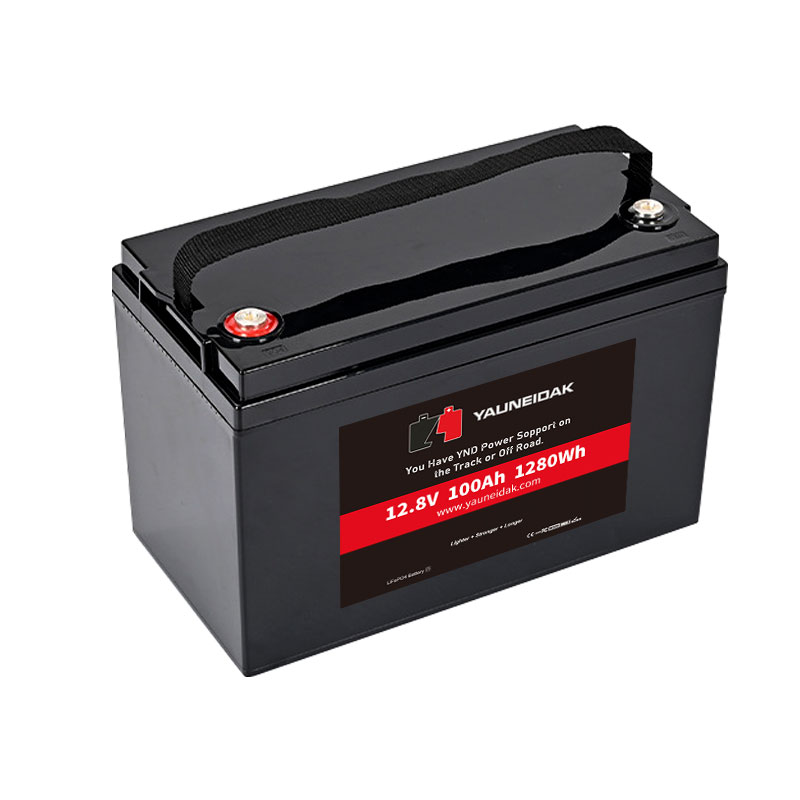
The latest technology on the market is lithium batteries, particularly lithium-ion batteries. Users often ask are LiFePO4 batteries safe? The answer is yes, they are a game-changing product for power users.
Lithium batteries weigh about half as much as lead-acid batteries but provide the same amount of power. They are often the preferred choice for smart lithium golf cart batteries due to their efficiency.
The price of lithium, the raw material for lithium-ion batteries, has dropped significantly, making them increasingly affordable. A high-quality lithium battery can last 10 years or even longer. To ensure this longevity, especially when using lithium batteries in cold weather, it is vital to understand what is a BMS (Battery Management System) and how it protects your investment.
Understanding Depth of Discharge (DoD)
To maximize the performance of your battery system, you need to understand discharge cycles. Each time you use the battery, its “charge” is depleted. This can be measured by the depth of discharge (DoD).
For traditional lead-acid and AGM batteries, it’s generally recommended not to discharge them below 50%. Frequently draining the battery to 0% can cause chemical damage to the lead plates, significantly shortening the battery’s lifespan.
This is where lithium batteries have an advantage. Lithium batteries can withstand higher depths of discharge, typically up to 80% or even 100%, without significant damage. This means you can utilize more of the battery’s rated capacity during your travels.
How to Charge a Deep Cycle Battery
Properly charging deep-cycle batteries is crucial to extending their lifespan. You cannot simply use any charger. You need to use a charger that matches the battery type.
Flooded deep-cycle batteries and AGM batteries require a three-stage charging process:
Bulk charging: Rapidly injects energy.
Absorption charging: Slows down the charging rate to fully charge the battery.
Float charging: Low-current trickle charging to maintain a full charge and prevent overcharging.
If you are using a lithium battery, you need a charger with a specific lithium battery charging mode. We recommend reading our guide on charging lithium batteries to avoid common mistakes. Using an old lead-acid battery charger to charge a lithium battery can lead to reduced performance or even damage.

.jpg)
.jpg)